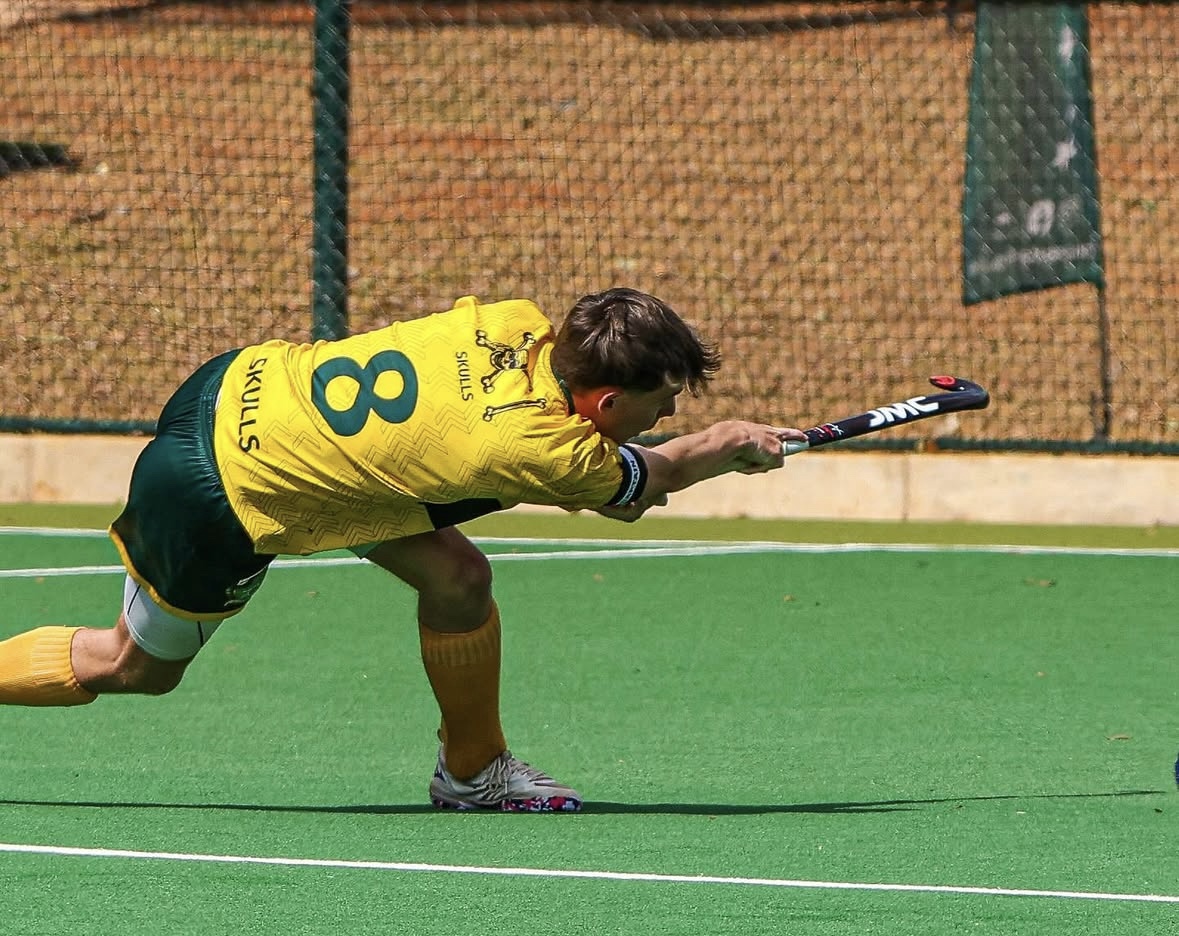
Field hockey is a high-intensity sport that demands speed, strength, power, agility, and endurance. Players accelerate, decelerate, change direction rapidly, stay low in athletic positions, and generate rotational power for hitting and passing.
To perform at your best, your training should focus on:
- Gym work (weights + calisthenics) – to build strength and power
- Purpose-driven programming – so every exercise improves on-field performance
- Game-day warm-up activation – to prepare muscles and reduce injury risk
Let’s break it down.
1. Strength Training in the Gym (With Weights)
Strength is the foundation for speed, power, and injury prevention. The stronger you are (relative to your bodyweight), the more explosive and resilient you will be on the pitch.
Lower Body (Power & Speed Development)
Field hockey is sprint dominant. Strong legs = faster acceleration and harder hits.
🏋️ Squats (Back Squat / Front Squat)
Purpose:
- Develop quad and glute strength
- Improve acceleration power
- Increase force production for sprinting
Strong squats translate directly to explosive first steps.
🏋️ Romanian Deadlifts (RDLs)
Purpose:
- Strengthen hamstrings and glutes
- Reduce hamstring strain risk
- Improve sprint top speed
The hamstrings are critical in sprinting and deceleration.
🏋️ Bulgarian Split Squats
Purpose:
- Improve single-leg strength (essential for running mechanics)
- Correct imbalances
- Enhance change-of-direction ability
Hockey is played one leg at a time — unilateral strength is key.
🏋️ Trap Bar Deadlifts
Purpose:
- Full lower-body power
- Safer alternative to conventional deadlifts
- Improve jumping and sprint acceleration
Upper Body (Power & Stick Strength)
Upper body strength improves shot power, tackling stability, and resistance to physical pressure.
🏋️ Bench Press / Dumbbell Press
Purpose:
- Develop pushing strength
- Increase shot and push-pass power
🏋️ Pull-Ups
Purpose:
- Strengthen upper back
- Improve shoulder stability
- Balance pressing work
A strong back prevents shoulder injuries and improves stick control.
🏋️ Landmine Rotations
Purpose:
- Build rotational power
- Improve hitting and drag flick force
Hockey shots rely heavily on trunk rotation.
Core Strength (Anti-Rotation & Stability)
Core stability protects the spine and enhances power transfer.
🏋️ Pall-of Press
Purpose:
- Anti-rotation strength
- Stabilises torso during shooting and passing
🏋️ Dead Bugs / Plank Variations
Purpose:
- Improve trunk control
- Enhance sprint posture
2. Calisthenics for Field Hockey
Calisthenics improve body control, coordination, and athleticism.
🔥 Push-Ups
- Upper body endurance
- Core stability
- Shoulder control
🔥 Chin-Ups
- Grip strength
- Upper back development
🔥 Walking Lunges
- Hip mobility
- Balance
- Functional leg strength
🔥 Nordic Hamstring Curls
- Eccentric hamstring strength
- Reduces hamstring injury risk
- Improves sprint durability
🔥 Jump Squats / Broad Jumps
- Explosive power
- Acceleration mechanics
Power training should be done early in sessions when fresh.
3. Warm-Up for Game Day (Muscle Activation & Performance Prep)
A proper warm-up should:
- Increase core temperature
- Activate key muscle groups
- Improve mobility
- Prime nervous system for speed
Avoid static stretching before games — focus on dynamic movement.
Phase 1: General Warm-Up (5 minutes)
- Light jog
- Skips
- Side shuffles
- Backward runs
Purpose: Increase blood flow and prepare joints.
Phase 2: Mobility (Dynamic)
🔄 Leg Swings (Front & Side)
- Activate hip flexors and hamstrings
- Improve stride range
🔄 World’s Greatest Stretch
- Open hips
- Improve thoracic rotation
Phase 3: Activation
🔥 Glute Bridges
Why: Activates glutes for sprint power
🔥 Mini Band Lateral Walks
Why: Activates glute medius for knee stability and change of direction
🔥 Dead Bugs
Why: Activates deep core stabilisers
🔥 Scapular Push-Ups
Why: Activates shoulder stabilisers for stick control
Phase 4: Speed Prep
- 3–5 progressive sprints (20–30m)
- Acceleration drills
- Quick direction change drills
Purpose:
- Activate fast-twitch muscle fibres
- Improve reaction speed
- Prepare for game tempo
Game Day:
- Full activation warm-up
- Short stick + ball work
Key Training Principles
✔ Train movements, not just muscles
✔ Prioritise unilateral strength
✔ Build hamstring resilience
✔ Develop rotational power
✔ Activate before competing
✔ Recover properly
Final Thoughts
Training for field hockey isn’t about bodybuilding — it’s about becoming:
- Faster
- More explosive
- Stronger in contact
- Resistant to injury
- Powerful in your shot
When you combine structured gym work, calisthenics for athleticism, and smart pre-game activation, you’ll see measurable improvements in speed, power, and confidence on the pitch.
Below is a 4-week gym program for all four positions in field hockey. While everyone needs strength, power, and durability, each position has slightly different physical demands:
- Defenders → Strength, tackling power, change of direction, aerial strength
- Midfielders → Repeat sprint ability, strength endurance, all-round robustness
- Forwards → Acceleration, explosive power, agility, sharp directional speed
- Goalkeepers → Lateral explosiveness, reaction power, hip mobility, upper body strength
Each plan assumes:
- 2–3 gym sessions per week
- 60–75 minutes per session
- Progressive overload across 4 weeks
🔵 DEFENDER – 4 Week Program
Focus: Strength, physical dominance, rotational power
Weekly Structure
- Day 1: Lower Body Strength
- Day 2: Upper Body + Rotation
- Day 3 (Optional): Power & Change of Direction
Day 1 – Lower Strength
Weeks 1–2
- Back Squats – 4×6
- Romanian Deadlifts – 3×8
- Bulgarian Split Squats – 3×8 each leg
- Nordic Hamstrings – 3×5
- Plank Variations – 3x45s
Weeks 3–4
- Back Squats – 5×4 (heavier)
- RDL – 4×6
- Walking Lunges – 3×10 each
- Nordic – 3×6
- Pall-of Press – 3×12
Purpose: Build tackling strength, sprint power, and injury resistance.
Day 2 – Upper + Rotational Power
Weeks 1–2
- Bench Press – 4×6
- Pull-Ups – 4×6
- Landmine Rotations – 3×8 each side
- Dumbbell Shoulder Press – 3×8
- Farmer Carries – 3x30m
Weeks 3–4
- Bench – 5×4
- Weighted Pull-Ups – 4×5
- Landmine Rotations – 4×6
- Single Arm DB Rows – 3×8
- Push-Ups (Explosive) – 3×8
Purpose: Improve shot power and strength in physical duels.
Optional Day 3 – Power
- Trap Bar Deadlift – 4×3
- Box Jumps – 4×3
- Lateral Bounds – 3×6 each
- 5-10-5 Agility Drill – 4 rounds
🟢 MIDFIELDER – 4 Week Program
Focus: Strength endurance, repeat sprint power, durability
Weekly Structure
- Day 1: Lower Body + Conditioning
- Day 2: Upper Body Strength
- Day 3: Power Circuit
Day 1 – Lower Strength Endurance
Weeks 1–2
- Front Squats – 4×6
- RDL – 3×8
- Step-Ups – 3×10 each
- Calf Raises – 3×15
- Core Circuit (Plank, Dead Bug, Side Plank)
Weeks 3–4
- Front Squats – 5×5
- RDL – 4×6
- Walking Lunges – 3×12
- Nordic – 3×6
- Pall-of Press – 3×12
Day 2 – Upper Body
- Pull-Ups – 4×6
- Dumbbell Bench – 4×8
- Single Arm Row – 3×8
- Landmine Press – 3×8
- Chin-Ups – 3xAMRAP
Day 3 – Power Conditioning Circuit
3–4 Rounds:
- Kettlebell Swings x15
- Push-Ups x15
- Jump Squats x10
- Battle Ropes 30s
- 30m Sprint
Rest 90 seconds between rounds.
Purpose: Mimics repeated sprint demands of midfield play.
🔴 FORWARD – 4 Week Program
Focus: Acceleration, agility, explosive strength
Weekly Structure
- Day 1: Lower Body Power
- Day 2: Upper + Speed
- Day 3: Acceleration & Plyometrics
Day 1 – Lower Power
Weeks 1–2
- Trap Bar Deadlift – 4×4
- Bulgarian Split Squat – 3×8
- Box Jumps – 4×3
- Hamstring Curls – 3×10
- Core Rotation – 3×12
Weeks 3–4
- Trap Bar – 5×3
- Split Squats – 4×6
- Broad Jumps – 4×3
- Nordic – 3×6
- Pall-of Press – 3×12
Day 2 – Upper + Speed
- Bench Press – 4×5
- Pull-Ups – 4×6
- Med Ball Rotational Throws – 4×6
- Explosive Push-Ups – 3×8
- Sprint Starts – 6x20m
Day 3 – Acceleration Session
- A-Skips
- Resisted Sprints (light sled) – 6x15m
- Lateral Bounds – 3×6
- 1v1 Reaction Drill
- 3x30m Full Sprint
Purpose: Build that first 5–10m explosiveness.
🟣 GOALKEEPER – 4 Week Program
Focus: Lateral power, reaction strength, hip mobility
Weekly Structure
- Day 1: Lower Body Stability
- Day 2: Upper Body Strength
- Day 3: Explosive Reaction
Day 1 – Lower Stability
Weeks 1–2
- Goblet Squats – 4×8
- Lateral Lunges – 3×8 each
- Single-Leg RDL – 3×8
- Copenhagen Planks – 3x30s
- Glute Bridges – 3×12
Weeks 3–4
- Front Squat – 4×5
- Lateral Lunges – 4×6
- Single-Leg RDL – 4×6
- Nordic – 3×5
- Pall-of Press – 3×12
Day 2 – Upper Body
- Pull-Ups – 4×6
- Dumbbell Bench – 4×8
- Shoulder External Rotations – 3×12
- Landmine Press – 3×8
- Farmer Carries – 3x30m
Day 3 – Explosive Reaction
- Lateral Bounds – 4×5
- Med Ball Chest Pass – 4×6
- Drop Step Reaction Drill
- Short Shuttle (5m–10m–5m)
- Reaction Ball Work
Purpose: Improve dive speed and rapid direction change.
Game Day Warm-Up (All Positions)
- Light jog + skips (5 min)
- Leg swings + dynamic lunges
- Mini-band lateral walks
- Glute bridges
- Dead bugs
- 3 progressive sprints
- Quick stick & reaction drills
Progression Rules
Week 1 → Learn form
Week 2 → Add small weight increase
Week 3 → Increase intensity (heavier, lower reps)
Week 4 → Peak week (high intensity, low volume)